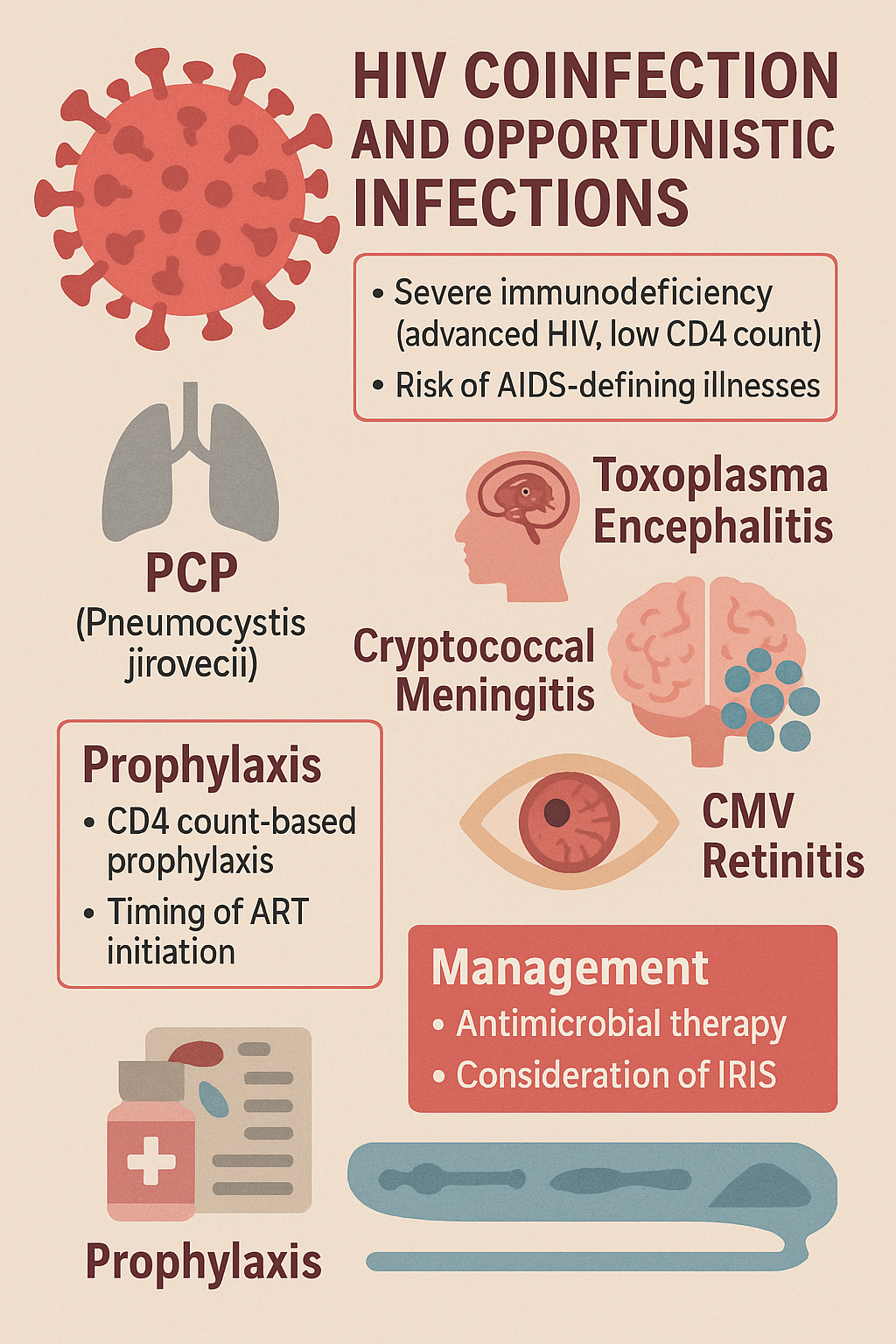
HIV Opportunistic Infections
---
## 1. Concept: HIV, coinfections and opportunistic infections
**Definition**
* **Opportunistic infection (OI)**: infection that occurs with increased frequency/severity when immunity is impaired, especially **CD4 T-cell depletion** in HIV.
* **Coinfection**: presence of HIV plus **another pathogen** (e.g. TB, HBV, HCV, malaria, STIs) which may or may not be opportunistic but interacts with HIV (worse progression, higher viral load, drug interactions). ([CDC][2])
**Pathophysiology**
* Progressive HIV replication → CD4 decline → failure of **cell-mediated immunity** → reactivation of latent infections (TB, toxoplasma, CMV) and new infections (PCP, cryptococcus, MAC).
* OIs themselves increase HIV viral load transiently and accelerate disease. ([CDC][2])
* Starting ART may trigger **IRIS (Immune Reconstitution Inflammatory Syndrome)**: recovering immune system mounts exaggerated response to existing antigen load → paradoxical clinical deterioration (e.g. worse TB lymphadenitis, increased ICP in cryptococcal meningitis). ([NACO][3])
---
## 2. Important OIs & typical CD4 thresholds
Approximate **CD4 levels** at which OIs are common:
* **Any CD4**: TB, bacterial pneumonia/sepsis, oral candidiasis, herpes zoster.
* **<200 cells/µL**:
* **Pneumocystis jirovecii pneumonia (PCP/PJP)** ([ASM Journals][4])
* Recurrent bacterial pneumonia.
* **<100 cells/µL**:
* **Toxoplasma gondii encephalitis** (if IgG⁺). ([UpToDate][5])
* **Cryptococcal meningitis**, disseminated cryptococcosis. ([ASM Journals][6])
* **<50 cells/µL**:
* **Mycobacterium avium complex (MAC)** (disseminated). ([bhiva.org][7])
* CMV retinitis, CMV colitis. ([nhstaysideadtc.scot.nhs.uk][8])
You’ll often see questions coupling:
* CD4 180 → PCP
* CD4 60 + ring-enhancing lesions → toxoplasma
* CD4 30 + meningitis with ↑OP → cryptococcus
* CD4 20 + fever, hepatosplenomegaly, ALP↑ → MAC
---
## 3. Diagnostic & management principles
### A. General diagnostic work-up in advanced HIV
* Full history: ART adherence, **CD4 trend**, VL, prior OIs, prophylaxis.
* Physical: skin lesions (Kaposi, molluscum), mucosal candidiasis, focal neurologic signs, neck stiffness.
* Baseline labs: CBC, LFT, RFT, electrolytes, LDH, blood cultures.
* HIV-specific: current VL, CD4 count.
* Imaging:
* CXR/HRCT for pneumonia (PCP: bilateral interstitial infiltrates).
* CT/MRI brain for focal lesions (toxoplasma, lymphoma).
* OI-specific tests:
* **PCP**: induced sputum / BAL with silver stain, PCR.
* **Toxoplasma**: MRI ring-enhancing lesions + IgG serology; definitive = brain biopsy. ([Medscape Education][9])
* **Cryptococcal**: serum/CSF cryptococcal antigen (CrAg), India ink, fungal culture. ([ASM Journals][6])
* **MAC**: blood cultures, bone marrow culture. ([National Health Mission][10])
* **TB**: GeneXpert/NAAT, cultures; extrapulmonary sampling.
### B. General treatment principles
1. **Stabilise the patient first**
* ABC, oxygen, treat sepsis, manage raised ICP (cryptococcus), control seizures, correct electrolytes.
2. **Specific OI treatment**
* PCP: high-dose TMP-SMX ± steroids. ([ClinicalInfo][11])
* Toxoplasma encephalitis: pyrimethamine + sulfadiazine + leucovorin (or TMP-SMX high-dose). ([ClinicalInfo][12])
* Cryptococcal meningitis: amphotericin B + flucytosine induction → fluconazole consolidation + maintenance. ([New England Journal of Medicine][13])
* MAC: macrolide (clarithro/azithro) + ethambutol ± rifabutin. ([National Health Mission][10])
* TB: standard HRZE with attention to **rifampicin–ART interactions**.
3. **When to start ART in acute OI** (adult, typical exam stance)
* **PCP, toxoplasma, MAC, most bacterial OIs**: start ART within ~2 weeks once patient stabilizes.
* **TB**: within 2 weeks if CD4 <50; by 8 weeks if ≥50 (and no CNS TB).
* **Cryptococcal meningitis & TB meningitis**: delay ART ~4–6 weeks due to severe CNS-IRIS risk. ([The Lancet][14])
4. **Secondary prophylaxis / chronic maintenance**
Continue specific suppressive therapy until immune reconstitution (details in prophylaxis section).
5. **Manage drug interactions & toxicities**
* Check for **overlap**: marrow suppression (zidovudine + TMP-SMX + ganciclovir), nephrotoxicity (tenofovir + amphotericin), hepatotoxicity (TB drugs + azoles + ART), QT prolongation (macrolides, fluoroquinolones, some ARVs).
---
## 4. Prophylaxis strategy: what, when to start, when to stop
### A. Primary prophylaxis (prevent first episode)
**PCP**
* **Indication** (Adults):
* CD4 **<200 cells/µL** OR
* CD4% <14% OR
* Oropharyngeal candidiasis or unexplained fever >2 weeks, even if CD4 >200. ([ASM Journals][4])
* **Preferred regimen**:
* TMP-SMX 1 DS (160/800 mg) **once daily**.
* **Alternatives** (if sulfa intolerance):
* Dapsone 100 mg daily ± pyrimethamine + leucovorin, or
* Atovaquone 1500 mg PO daily with food. ([NACO][3])
* **Stop** when CD4 ≥200 for ≥3 months on ART (and VL suppressed). Restart if CD4 <100 or 100–200 with viremia. ([bccfe.ca][15])
**Toxoplasma gondii encephalitis (TE)**
* **Indications**:
* Toxoplasma IgG positive + CD4 **<100 cells/µL**. ([ClinicalInfo][12])
* **Preferred prophylaxis**:
* TMP-SMX 1 DS once daily (same as PCP prophylaxis).
* **Alternatives**:
* Dapsone 50 mg daily + pyrimethamine 50 mg weekly + leucovorin, etc. ([NACO][3])
* **Stop** when CD4 >200 for ≥3 months on ART (or 100–200 with sustained VL suppression). ([bccfe.ca][16])
**MAC (disseminated)**
* **Modern guidelines**: If ART is started promptly and VL suppressed, **routine primary prophylaxis is generally NOT recommended**. ([hiv.uw.edu][17])
* If used (e.g. cannot start ART, CD4 <50):
* Azithromycin 1200 mg weekly PO (or 600 mg twice weekly). ([bhiva.org][7])
**Cryptococcus**
* Many programs: **CrAg screening** for CD4 <100.
* If **asymptomatic CrAg-positive**: high-dose fluconazole 800 mg/day for 2 weeks, then 400 mg/day 8–10 weeks, then 200 mg/day until immune recovery (pre-emptive treatment = a form of prophylaxis). ([ASM Journals][6])
**TB (latent)**
* All PLHIV should be screened with symptom screen + TST/IGRA where available.
* **Isoniazid preventive therapy (IPT)**: INH 300 mg daily + pyridoxine 25–50 mg daily for 6–9 months in latent TB or high-burden settings, irrespective of CD4.
### B. Secondary prophylaxis (after an OI)
* **PCP** – lower-dose TMP-SMX (e.g. 1 SS daily) until CD4 ≥200 for ≥3 months on ART. ([bccfe.ca][15])
* **Toxoplasma encephalitis** – reduced-dose pyrimethamine + sulfadiazine + leucovorin OR TMP-SMX DS daily until CD4 ≥200 for ≥6 months on ART. ([bccfe.ca][16])
* **Cryptococcal meningitis** – fluconazole 200 mg daily for at least 1 year and until CD4 ≥100–200 with suppressed VL. ([bccfe.ca][18])
* **MAC** – clarithro/azithro + ethambutol until ≥12 months of therapy AND CD4 ≥100 for ≥6 months. ([National Health Mission][10])
---
## 5. High-yield drug mini-monographs (for OI prophylaxis)
### 5.1 Trimethoprim–Sulfamethoxazole (TMP-SMX, co-trimoxazole)
* **Indications in HIV**
* Primary & secondary **PCP prophylaxis**.
* Toxoplasma prophylaxis in IgG⁺ patients.
* Treatment of PCP, toxoplasma (high doses).
* **Mechanism**: sequential blockade of folate synthesis (sulfamethoxazole: dihydropteroate synthase; trimethoprim: DHF reductase) → inhibits DNA synthesis.
* **Usual prophylactic dosing (adults)**
* 1 **DS** (160/800 mg) once daily; or 1 SS daily, or 1 DS three times/week if toxicity. ([AAHIVM][19])
* **Paediatric**: 150 mg/m² trimethoprim component once daily (approx 5 mg/kg TMP).
* **PK**: good oral absorption, renal elimination; T½ ~10 h.
* **Common AEs**: rash, nausea, mild hyperkalaemia, creatinine rise, photosensitivity.
* **Serious AEs**: Stevens–Johnson, TEN, severe neutropenia, thrombocytopenia, hepatitis, aseptic meningitis.
* **Contraindications**: severe sulfa allergy, major prior SJS/TEN, severe hepatic failure, marked renal failure without dose adjustment, G6PD deficiency (caution).
* **Important interactions**: ↑ toxicity with other antifolates (methotrexate), additive marrow suppression with zidovudine, ganciclovir, interferon; ↑ INR with warfarin.
* **Monitoring**: CBC, creatinine, K⁺, LFTs; watch for rash.
* **Counselling**: take with water, report rash or mucosal lesions immediately; avoid self-stopping – contact provider to discuss desensitization/alternatives.
### 5.2 Dapsone
* **Indications**: alternative PCP/toxoplasma prophylaxis in sulfa-intolerant patients. ([NACO][3])
* **Mechanism**: sulfone that inhibits folate synthesis similar to sulfonamides.
* **Dose**: 100 mg PO once daily (or 50 mg daily when combined with pyrimethamine weekly).
* **PK**: hepatic metabolism, long T½ (~20–30 h).
* **AEs**: haemolysis (esp. G6PD deficiency), methaemoglobinaemia, rash, agranulocytosis, peripheral neuropathy.
* **Contraindications**: severe G6PD deficiency, previous severe reaction.
* **Monitoring**: baseline G6PD, Hb, retic count/met-Hb if symptomatic.
* **Counselling**: report dark urine, SOB, cyanosis; don’t use OTC oxidant drugs without advice.
### 5.3 Atovaquone
* **Indication**: PCP prophylaxis/alternative treatment when TMP-SMX not tolerated. ([bccfe.ca][15])
* **Mechanism**: inhibits mitochondrial electron transport in protozoa/fungi.
* **Dose**: 1500 mg PO once daily **with fatty meal**.
* **AEs**: GI upset, rash, headache; generally well tolerated.
* **Interactions**: rifampicin & tetracyclines ↓ atovaquone levels; monitor if combined with ART with GI effects.
* **Counselling**: must be taken with high-fat food to work; if severe diarrhoea, efficacy reduced.
### 5.4 Azithromycin (for MAC prophylaxis/treatment)
* **Indications**:
* Primary prophylaxis against disseminated MAC when CD4 <50 and ART cannot be started.
* Part of MAC treatment (with ethambutol ± rifabutin). ([bhiva.org][7])
* **Mechanism**: macrolide – 50S ribosomal subunit inhibition.
* **Dose (prophylaxis)**: 1200 mg once weekly OR 600 mg twice weekly PO.
* **AEs**: GI upset, QT prolongation, mild LFT derangement.
* **Interactions**: fewer CYP interactions than clarithromycin but still caution with QT-prolonging ARVs; avoid with strong QT-prolongers.
* **Monitoring**: ECG in high-risk; LFTs if prolonged.
### 5.5 Isoniazid (INH)
* **Indications**: latent TB treatment / preventive therapy in PLHIV.
* **Mechanism**: inhibits mycolic acid synthesis in mycobacteria.
* **Dose**: 300 mg PO once daily + pyridoxine 25–50 mg daily for 6–9 months.
* **AEs**: hepatotoxicity, peripheral neuropathy, rash, lupus-like syndrome.
* **Contraindications**: acute hepatitis, severe chronic liver disease (relative).
* **Monitoring**: LFTs baseline & if symptomatic.
* **Counselling**: avoid alcohol; report jaundice, neuropathic symptoms early.
### 5.6 Fluconazole
* **Indications**:
* Pre-emptive therapy in asymptomatic CrAg-positive patients.
* Consolidation and maintenance in cryptococcal meningitis. ([ASM Journals][6])
* **Mechanism**: triazole – inhibits fungal 14-α-demethylase → ergosterol synthesis ↓.
* **Doses**:
* Pre-emptive: 800 mg/day 2 weeks → 400 mg/day 8–10 weeks → 200 mg/day until CD4 recovery. ([NCBI][20])
* Secondary prophylaxis: 200 mg/day long term.
* **AEs**: GI upset, rash, alopecia (long-term), hepatotoxicity, QT prolongation.
* **Interactions**: CYP2C9/3A4 inhibitor – ↑ levels of warfarin, some ARVs (esp. nevirapine, some protease inhibitors), some antiepileptics.
* **Monitoring**: LFTs, ECG if other QT drugs.
---
## 6. 25 case scenarios – coinfections, OIs, management & prophylaxis
Each case: **summary → diagnosis → immediate management → prophylaxis plan.**
---
### Case 1 – First presentation with PCP
32-year-old man, newly diagnosed HIV, CD4 120, subacute non-productive cough, progressive dyspnoea, fever, desaturation on exertion; CXR: bilateral perihilar interstitial infiltrates; ABG: A-a gradient high.
* **Likely diagnosis**: PCP.
* **Management**: hospitalize; high-dose IV/PO TMP-SMX (15–20 mg/kg/day TMP in 3–4 doses) + steroids if PaO₂ <70; start ART after ~2 weeks once stable.
* **Prophylaxis**: after treatment, move to TMP-SMX 1 DS daily as secondary prophylaxis until CD4 ≥200 for ≥3 months.
---
### Case 2 – Oral candidiasis as a red flag
28-year-old woman with long-standing HIV, not on ART for 1 year, presents with painful white plaques in mouth, odynophagia. CD4 170.
* **Diagnosis**: oropharyngeal/esophageal candidiasis.
* **Management**: fluconazole 200 mg loading then 100–200 mg daily 7–14 days (longer if esophageal); start/optimize ART.
* **Prophylaxis**: regardless of CD4 (170 <200 and thrush present) → start PCP prophylaxis with TMP-SMX DS daily.
---
### Case 3 – Toxoplasma encephalitis
40-year-old man with HIV, irregular ART, CD4 60, headache, seizures, right hemiparesis. MRI brain: multiple ring-enhancing lesions in basal ganglia; Toxo IgG positive.
* **Diagnosis**: Toxoplasma encephalitis.
* **Management**: pyrimethamine + sulfadiazine + leucovorin for at least 6 weeks, then secondary prophylaxis; consider high-dose TMP-SMX if first-line unavailable. Delay ART 1–2 weeks.
* **Prophylaxis**: after acute Rx → reduced-dose pyrimethamine-sulfadiazine or TMP-SMX DS OD until CD4 >200 for ≥6 months.
---
### Case 4 – Toxoplasma prophylaxis missed
Same patient as Case 3 – review history shows toxo IgG⁺ 1 year earlier, CD4 then 80, but no prophylaxis.
* **Teaching point**: should have been on **primary prophylaxis** (TMP-SMX DS daily) when IgG⁺ + CD4 <100 to prevent TE.
---
### Case 5 – Cryptococcal meningitis
35-year-old man, CD4 40, presents with subacute headache, fever, blurring of vision; neck stiffness mild; LP: ↑ opening pressure, low glucose, high protein, lymphocytes; CSF India ink +, CrAg strongly positive.
* **Diagnosis**: cryptococcal meningitis.
* **Management**:
* Induction: amphotericin B + flucytosine 2 weeks; manage raised ICP with repeated LPs.
* Consolidation: fluconazole 400–800 mg/day 8 weeks.
* Maintenance: fluconazole 200 mg/day ≥1 year. ART start delayed ~4–6 weeks.
* **Prophylaxis**: maintenance fluconazole (secondary), can stop when CD4 ≥100–200 with sustained viral suppression.
---
### Case 6 – Asymptomatic CrAg-positive screen
HIV patient, CD4 45, no symptoms; CrAg screening positive in serum; LP normal.
* **Diagnosis**: asymptomatic cryptococcal antigenaemia.
* **Management**: oral fluconazole 800 mg/day for 2 weeks → 400 mg/day for 8–10 weeks → 200 mg/day until immune reconstitution; start ART after ~2 weeks if well.
* **Prophylaxis**: this regimen is effectively **pre-emptive primary prophylaxis** to prevent meningitis.
---
### Case 7 – Disseminated TB co-infection
29-year-old man, HIV+, newly diagnosed, CD4 110, with fever, weight loss, cough, hepatosplenomegaly, matted cervical nodes; CXR: miliary mottling; Xpert positive for MTB.
* **Diagnosis**: disseminated TB in HIV.
* **Management**: start HRZE with careful drug–drug interaction planning; start ART within 2 weeks (CD4 <50–100 rule, but many exams accept 2 weeks for severe TB).
* **Prophylaxis**:
* Household contacts → INH preventive therapy.
* After completion of TB therapy, consider INH prophylaxis depending on local guideline & risk.
---
### Case 8 – TB meningitis with HIV
36-year-old HIV+ man CD4 70, chronic headache, fever, cranial nerve palsies; CSF lymphocytic, ADA↑, Xpert positive.
* **Diagnosis**: tuberculous meningitis.
* **Management**: HRZE with steroids; **delay ART ~4–8 weeks** to reduce CNS IRIS; manage raised ICP.
* **Prophylaxis**: as above, no specific secondary prophylaxis, but close follow-up; consider isoniazid preventive therapy after completed regimen in high-risk areas.
---
### Case 9 – MAC in advanced HIV
45-year-old male, CD4 20, not on ART, presents with prolonged fever, weight loss, diarrhoea, abdominal pain, hepatosplenomegaly, high ALP; blood cultures: MAC.
* **Diagnosis**: disseminated MAC.
* **Management**: azithromycin + ethambutol ± rifabutin for ≥12 months; start ART after 2 weeks.
* **Prophylaxis**: secondary prophylaxis continues until CD4 ≥100 for ≥6 months; **primary prophylaxis** with azithro would be considered if he was not starting ART and CD4 <50.
---
### Case 10 – Missed MAC prophylaxis
Same patient had CD4 30 six months ago and was not started on ART or MAC prophylaxis.
* **Teaching point**: in someone who **cannot** start ART with CD4 <50, MAC prophylaxis with weekly azithromycin (or daily clarithromycin) is indicated.
---
### Case 11 – Recurrent bacterial pneumonias
33-year-old woman, HIV+, CD4 190, two lobar pneumonias in last year, smoker.
* **Diagnosis**: recurrent bacterial pneumonia; consider humoral deficiency, smoking, bronchiectasis.
* **Management**: treat current episode with appropriate IV antibiotics; smoking cessation; vaccinate with PCV/PPV, influenza.
* **Prophylaxis**: ensure PCP prophylaxis (CD4<200), optimize ART, vaccinations (PCV13/PPV23, Hib, flu).
---
### Case 12 – CMV retinitis
37-year-old man, CD4 25, blurred vision, floaters; fundoscopy: “pizza pie” haemorrhagic lesions.
* **Diagnosis**: CMV retinitis.
* **Management**: systemic valganciclovir ± intravitreal ganciclovir; urgent ophthalmology; start ART within 2 weeks.
* **Prophylaxis**: secondary prophylaxis with valganciclovir until CD4 >100–150 for ≥3–6 months.
---
### Case 13 – Kaposi sarcoma with pulmonary OIs
30-year-old man, MSM, HIV+, purple papules on skin, CD4 90, cough, dyspnoea; CXR diffuse infiltrates; bronchoscopy: PCP.
* **Diagnosis**: Kaposi sarcoma (cutaneous ± pulmonary) + PCP.
* **Management**: treat PCP with TMP-SMX + steroids; start ART; chemo for extensive KS.
* **Prophylaxis**: TMP-SMX secondary prophylaxis; routine MAC/TE prophylaxis as per CD4.
---
### Case 14 – HBV coinfection
42-year-old man, HIV-HBV coinfected, high HBV DNA, CD4 350, needs ART.
* **Management**: start ART containing **tenofovir (TDF/TAF) + lamivudine/emtricitabine** (dual-active for HBV); avoid stopping these abruptly to prevent HBV flare.
* **Prophylaxis note**: HBV treatment here acts as **long-term prophylaxis** against HBV reactivation.
---
### Case 15 – HCV coinfection and OI risk
45-year-old woman, HIV-HCV coinfection, on ART with CD4 260, persistent elevated LFTs, planning HCV DAA therapy.
* **Management**: choose DAA regimen compatible with ART; counsel about alcohol cessation; monitor drug interactions.
* **Prophylaxis**: OI prophylaxis not indicated (CD4>200, no OI); but vaccinate for HAV/HBV if not immune to prevent severe acute hepatitis.
---
### Case 16 – IRIS with TB lymphadenitis
Patient with HIV-TB coinfection started ART 1 week after TB therapy (CD4 30). Six weeks later, lymph nodes enlarge, fever worsens, cultures still negative, adherence good.
* **Diagnosis**: paradoxical TB-IRIS.
* **Management**: continue TB Rx and ART; give NSAIDs or short course steroids in severe cases; exclude true failure or new OI.
* **Prophylaxis**: no change in TMP-SMX or other OI prophylaxis; emphasize adherence.
---
### Case 17 – IRIS in cryptococcal disease
HIV patient with cryptococcal meningitis started ART 1 week after amphotericin; 2 weeks later, severe headache, raised ICP.
* **Diagnosis**: cryptococcal IRIS; ART started too early.
* **Management**: manage raised ICP, consider corticosteroids; **do not stop antifungals**, may need to pause ART temporarily in severe CNS IRIS (per specialist decision).
* **Prophylaxis**: same secondary fluconazole; future learning: delay ART 4–6 weeks in cryptococcal meningitis.
---
### Case 18 – Pregnancy with advanced HIV & OIs
27-year-old pregnant woman (24 weeks), newly diagnosed HIV, CD4 130, oral candidiasis and chronic cough; CXR: PCP pattern.
* **Management**: TMP-SMX is still first-line for PCP in pregnancy (benefit outweighs risk), plus steroids if indicated; start pregnancy-safe ART (e.g. TDF/3TC/DTG as per current guidelines) after PCP stabilises.
* **Prophylaxis**: TMP-SMX prophylaxis will continue (also reduces malaria, bacterial infections in pregnancy in endemic areas); monitor folate and haemoglobin.
---
### Case 19 – Paediatric HIV with PCP
5-year-old child, vertically infected HIV, CD4% 11%, severe tachypnoea, hypoxia, bilateral interstitial changes.
* **Diagnosis**: PCP pneumonia in child.
* **Management**: IV TMP-SMX 15–20 mg/kg/day TMP component in divided doses + steroids; start/optimize paediatric ART.
* **Prophylaxis**: after recovery, TMP-SMX 5 mg/kg TMP once daily as secondary prophylaxis until CD4% >15–20% and stable.
---
### Case 20 – Severe sulfa allergy
30-year-old HIV+ man, CD4 70, had life-threatening SJS with TMP-SMX previously; now needs PCP/TE prophylaxis.
* **Management**: **avoid all sulfa drugs.** Use atovaquone 1500 mg OD with food for PCP; for toxoplasma prophylaxis, dapsone-pyrimethamine-leucovorin is generally contraindicated (sulfa); consider atovaquone ± specialist alternatives.
* **Prophylaxis**: atovaquone until CD4 >200 for ≥3 months; robust ART.
---
### Case 21 – Malaria coinfection with HIV
HIV-positive man in malaria-endemic region, CD4 220, presents with fever, anaemia, positive P. falciparum smear.
* **Management**: weight-based artemisinin-based combination therapy; avoid drug interactions with ART (esp. protease inhibitors).
* **Prophylaxis**: OI prophylaxis not indicated by CD4; but TMP-SMX (if used for PCP) also offers some antimalarial effect; use bed nets and vector control.
---
### Case 22 – STI coinfection increasing HIV transmission
25-year-old MSM with HIV (CD4 450, suppressed VL) but presents with painful genital ulcers; T. pallidum positive (syphilis).
* **Management**: benzathine penicillin G; partner notification; risk-reduction counselling.
* **Prophylaxis angle**: Although not an OI, treating STIs reduces genital inflammation and HIV transmission risk – a form of **secondary prevention** in public health terms.
---
### Case 23 – Recurrent herpes simplex
HIV+ patient, CD4 90, recurrent painful genital ulcers, HSV PCR positive.
* **Management**: oral acyclovir/valacyclovir treatment; consider chronic suppressive therapy.
* **Prophylaxis**: suppressive acyclovir doesn’t prevent classic “AIDS-defining OIs,” but it reduces HSV recurrences; TMP-SMX still required for PCP/TE prophylaxis.
---
### Case 24 – Post-OI CD4 recovery and stopping prophylaxis
Patient with prior PCP and TE, now on ART with CD4 260 for 1 year, VL undetectable; still on TMP-SMX DS OD and secondary TE regimen.
* **Question**: can prophylaxis be stopped?
* **Answer**: Yes – CD4 >200 for >3–6 months with VL suppressed → both PCP and TE prophylaxis can be safely discontinued. ([bccfe.ca][16])
---
### Case 25 – Poor adherence and recurrent OIs
HIV+ man with history of PCP and cryptococcal meningitis, frequently stops ART, CD4 fluctuates 40–250, now off ART and prophylaxis, presents with headache and cough.
* **Risk**: relapse of cryptococcal disease or new PCP.
* **Management**: full re-evaluation (LP, imaging, sputum/BAL); treat any active OI; intensive adherence counselling; involve psychosocial support.
* **Prophylaxis**: restart secondary prophylaxis (fluconazole, TMP-SMX) and ART; emphasize that stopping drugs abruptly is dangerous; consider DOT/adherence aids.
---
[1]: https://clinicalinfo.hiv.gov/en/guidelines/hiv-clinical-guidelines-adult-and-adolescent-opportunistic-infections/prophylaxis-prevent-first-episode?utm_source=chatgpt.com "Drug Therapies to Prevent First Episode of Opportunistic ..."
[2]: https://www.cdc.gov/mmwr/pdf/rr/rr58e324.pdf?utm_source=chatgpt.com "Guidelines for Prevention and Treatment of Opportunistic ..."
[3]: https://naco.gov.in/sites/default/files/7-Guidelines%20for%20Prevention%20and%20Management%20of%20common%20opportunistic%20infections.pdf?utm_source=chatgpt.com "Guidelines for Prevention and Management of Common ..."
[4]: https://journals.asm.org/doi/10.1128/cmr.00101-22?utm_source=chatgpt.com "Pneumocystis jirovecii pneumonia in people living with HIV"
[5]: https://www.uptodate.com/contents/toxoplasmosis-in-patients-with-hiv?utm_source=chatgpt.com "Toxoplasmosis in patients with HIV - UpToDate"
[6]: https://journals.asm.org/doi/10.1128/cmr.00156-22?utm_source=chatgpt.com "Diagnosis and management of cryptococcal meningitis in HIV ..."
[7]: https://bhiva.org/wp-content/uploads/2024/11/-file-SwhaEzgXmAGOt-hiv_v12_is2_Iss2Press_Text.pdf?utm_source=chatgpt.com "hiv medicine"
[8]: https://www.nhstaysideadtc.scot.nhs.uk/Antibiotic%20site/pdf%20docs/Opportunistic%20infections.pdf?utm_source=chatgpt.com "Opportunistic infections.pdf"
[9]: https://emedicine.medscape.com/article/1167298-overview?utm_source=chatgpt.com "CNS Toxoplasmosis in HIV: Overview, Pathophysiology ..."
[10]: https://nhm.gov.in/images/pdf/guidelines/nrhm-guidelines/stg/hiv-opportunistic-infections.pdf?utm_source=chatgpt.com "hiv: opportunistic infections"
[11]: https://clinicalinfo.hiv.gov/en/guidelines/hiv-clinical-guidelines-adult-and-adolescent-opportunistic-infections/pneumocystis?utm_source=chatgpt.com "Pneumocystis Pneumonia: Adult and Adolescent OIs | NIH"
[12]: https://clinicalinfo.hiv.gov/en/guidelines/hiv-clinical-guidelines-adult-and-adolescent-opportunistic-infections/toxoplasmosis?utm_source=chatgpt.com "Toxoplasma gondii Encephalitis: Adult and Adolescent OIs"
[13]: https://www.nejm.org/doi/full/10.1056/NEJMoa1110404?utm_source=chatgpt.com "Combination Antifungal Therapy for Cryptococcal Meningitis"
[14]: https://www.thelancet.com/journals/laninf/article/PIIS1473-3099%2823%2900731-4/abstract?utm_source=chatgpt.com "Global guideline for the diagnosis and management of ..."
[15]: https://bccfe.ca/wp-content/uploads/2024/04/bc-cfe_therapeutic_guidelines_for_opportunistic_infections-pcp-mar-2023_nov8.pdf?utm_source=chatgpt.com "Pneumocystis pneumonia (PCP)"
[16]: https://bccfe.ca/wp-content/uploads/2024/04/bc-cfe_therapeutic_guidelines_for_opportunistic_infections-toxoplasmosis.pdf?utm_source=chatgpt.com "toxoplasmosis"
[17]: https://www.hiv.uw.edu/pdf/co-occurring-conditions/opportunistic-infections-prevention/core-concept/all?utm_source=chatgpt.com "Opportunistic Infections: Prevention - Core Concepts"
[18]: https://bccfe.ca/wp-content/uploads/2024/04/bc-cfe_cryptococcosis_guidelines_oct2023.pdf?utm_source=chatgpt.com "Cryptococcosis"
[19]: https://aahivm.org/clinical-research-update-040419/?utm_source=chatgpt.com "Clinical Research Update 4.4.19"
[20]: https://www.ncbi.nlm.nih.gov/books/NBK531442/?utm_source=chatgpt.com "Key Recommendations, Rationale and Evidence Summary"
HIV Opportunistic Infections & Coinfections – 25 Case-based MCQs
Focus on PCP, toxoplasma, cryptococcus, MAC, TB, CMV, IRIS and prophylaxis thresholds (CD4-based).